Christmas in a Blended Family: How to Plan Gifts
Christmas in a blended family is easier to plan when the adults agree on three things: who’s buying what, where gifts will be opened, and which gifts can travel between homes. You don’t need to set the same budget everywhere. Just make the rules clear—and don’t ask kids to pass messages between adults.
1. Set ground rules with the adults before December
Set aside 20 minutes to talk with the adults involved before December begins. Don’t ask the kids to negotiate the details. Agree on three things in writing: the holiday dates, who’ll keep the gift ideas in one place, and how everyone will flag gifts already planned at each household.
Start with the people who actually decide what gets bought. Grandparents and other relatives can get the relevant details afterward, without being pulled into discussions between ex-partners.
One message is enough to start the conversation:
“I’d like us to coordinate gifts this year. This isn’t about comparing budgets—it’s about avoiding duplicates and knowing what will stay at each house. Can we take 20 minutes on Sunday?”
If communication is tense, stick to writing. Ask direct questions: “Is a bike already planned?” rather than “What else are you planning to buy?”
A relative can pass along practical information if the adults agree. But a child shouldn’t have to act as the messenger and get an answer from their other parent.
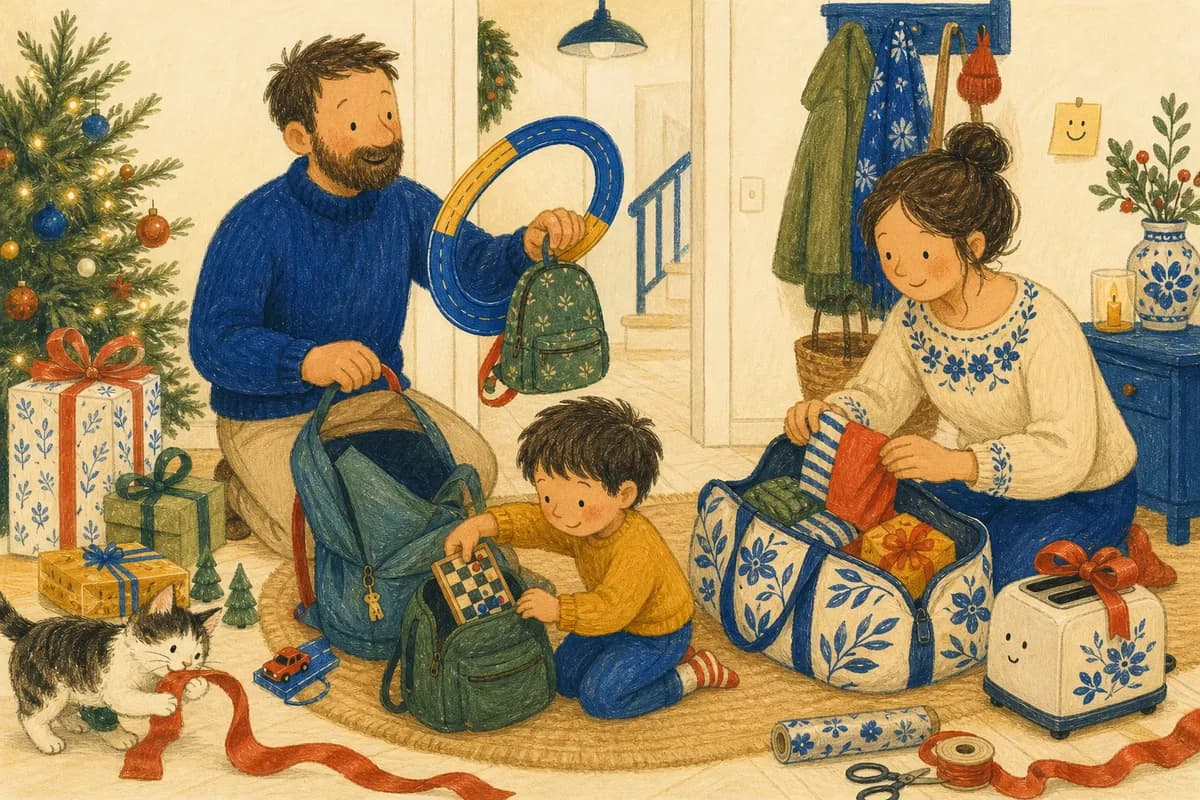
2. Aim for fairness, not identical spending
Choose a budget your household can manage, then separate gifts opened together from gifts given at other family celebrations. When several kids are together, plan a small gift for each one and avoid making the presentation feel dramatically unequal. You don’t need to match every dollar spent across different sides of the family.
A small gift might cost around $10 to $20. These are suggested ranges from Seizenn (October 2026), not the results of a survey.
Use these as flexible guidelines, not spending targets:
| Situation | Possible range | Helpful agreement |
|---|---|---|
| A small gift for a child at Christmas Eve dinner | $10 to $20 | No one gets left out during the gift opening |
| An individual gift at your home | $20 to $50 | Keep the budget within what you can afford |
| A larger group gift | Set a budget before buying | Everyone contributes voluntarily; no one is expected to front the money |
The way gifts are presented matters, too. Ten small packages next to one can look like a lot, even if their total value is similar. You can group some gifts together or open them at different times without turning the holiday into strict accounting.
“This is the budget we’re keeping at our house. You don’t have to match it, and we won’t ask the kids to compare what they got.”
3. Keep one shared list for each child
Use one main list per child and share it with the adults who want to give a gift, instead of sending out several separate versions. For each idea, include the model, acceptable alternatives, and where the item is expected to stay. Ask relatives to claim an idea before buying, even if they shop somewhere else.
On Seizenn, a free, ad-free gift-list service, you can add links from different stores and note a size, color, or “similar item is fine.” Relatives can view the list and reserve an item without creating an account. To plan Christmas in a blended family and coordinate gifts, start with what the kids need at both homes.
Your notes could say:
- “Keep at Dad’s house: there’s already one at Mom’s.”
- “Compact model that fits in a bag.”
- “Used is fine if possible; all the pieces need to be included.”
- “Please check with an adult before choosing an alternative.”
Reservations are hidden from the person who created the list. So don’t rely on that person to track every purchase—each gift-giver needs to reserve their own pick. The person managing the list can still mark an item they’re buying themselves, and relatives will see it as reserved.
You can create a shared Christmas gift list, then send the same link to each side of the family. A shared list is a tool, not a requirement. If it brings up old tensions, assign specific gift categories to each household instead.
4. Decide where gifts will go after the celebration
Decide where bulky gifts will stay before anyone buys them: at one specific home, for shared use, or as something easy to carry. A week before the first celebration, also confirm who’ll receive packages and keep the receipts, so a child doesn’t end up responsible for a return or a complicated trip between homes.
A gift given to a child shouldn’t become a bargaining chip between adults. If an item needs to stay at one home for practical reasons, explain that before the gift is opened, without making it sound like a punishment.
“This big train set will stay here because it takes up a lot of space. You can bring your small game with you if you want.”
A duplicate can be useful, too. Two boxes of crayons or two favorite games can mean fewer things to pack whenever a child switches homes. There’s a difference between a duplicate you choose to have and a second copy bought by mistake.
For a bulky gift, check three things: available space, agreement from the adult whose home it’s going to, and how it’ll get there. A surprise purchase shouldn’t force the other household to handle a mini move.
5. Have a plan for comparisons and disagreements
If a child compares gifts, acknowledge their disappointment without criticizing the other household or immediately promising to buy something extra to make up for it. Handle differences between adults separately, and make a specific request for next time instead of restarting the whole conflict during Christmas dinner.
You can keep it simple:
“I get that you wanted to get that here, too. Each home makes its own choices. It’s okay to feel disappointed, but we’re not going to turn gifts into a contest.”
If a relative buys something that’s already been reserved, first check whether the store will let them exchange it. Keep the conversation away from the kids, and don’t point fingers in front of them.
If someone’s purchase goes beyond what you agreed, talk about the practical consequences: not enough space, no way to transport it, or making the kids feel like they’re being pitted against each other. “Please check with me before buying anything bulky” is easier to follow than “Respect my choices more.”
Finally, don’t ask a child to pick which household gave them the best Christmas. They can enjoy different celebrations without ranking them.
The bottom line
Before the holidays, agree on a simple plan with the adults: one main gift list, a budget each household can manage, and a destination for big items. Then let the kids enjoy receiving gifts without making them responsible for coordination, keeping score, or resolving disagreements between different sides of the family.
- Talk before December, even briefly and in writing.
- Plan a gift for every child who’ll be there.
- Reserve gifts before buying and flag anything that’s not on the list.
- Make room for useful duplicates between two homes.
- Confirm transportation and receipts before the celebration.
- Work out disagreements between adults, never through the kids.
Frequently asked questions
Do both households need to spend the same amount at Christmas?
No. Each household can set a budget that works for its own finances. The goal is to avoid competition and promises to make up the difference. If the kids open gifts together, plan something for each child who’s there and avoid making the gift presentation feel unnecessarily unequal.
How can we avoid duplicate gifts if the parents don’t talk directly?
You can suggest a written conversation limited to gifts, or ask an adult both parents trust to pass along information. Share one main list and ask everyone to reserve a gift before buying it. If that still feels difficult, assign specific gift categories to each household instead of using the child as a messenger.
Does a gift need to travel between the two homes?
Not necessarily. A bulky item can stay at one home if the adults explain that clearly and without conflict. Decide where it will go before buying it. For smaller items, look for a practical option that respects what the child wants without creating a complicated packing routine.
What if a relative gives much more than we agreed on?
Don’t argue about it in front of the kids or take back a gift on the spot to even things out. Talk with the relative afterward about the practical consequences of the purchase. For the next holiday, set a clear rule, such as requiring advance approval for bulky gifts.