DIY Advent Calendar: How to Fill It With 24 Surprises
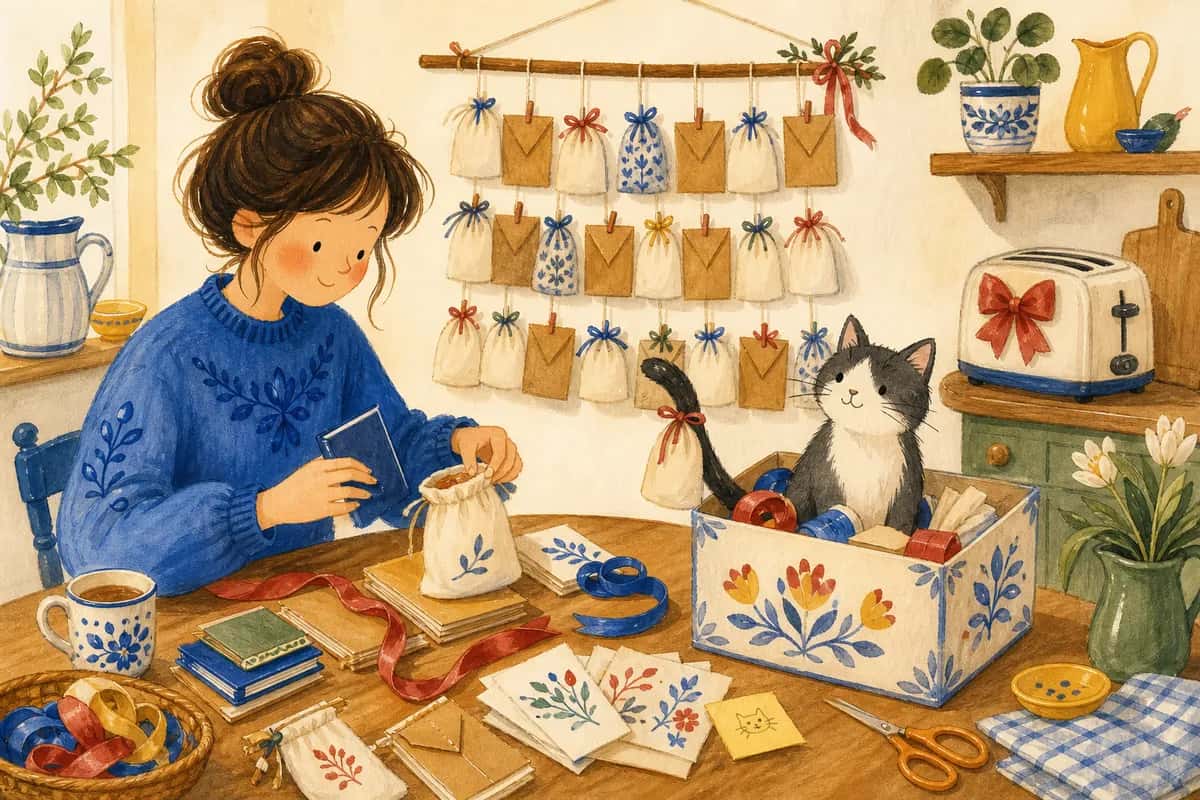
To make a DIY Advent calendar, get 24 containers, set a total budget, and mix small gifts with free activities. You can reuse envelopes, pouches, or boxes you already have at home. The goal is to create a little daily moment to look forward to—not to buy 24 gifts.
Which container should you use for your Advent calendar?
The best container is one that fits your surprises without requiring a big shopping trip or a complicated storage plan.
Start by seeing what you already have: envelopes, bags, boxes, fabric scraps, or a basket. Then stick with one type of container to make prep easier.
- Envelopes in a box: Great for notes, photos, and activities. They don’t take up much space.
- Paper bags hung up on a string: Easy to fill and close. All you need is some string and clothespins.
- Fabric pouches: Handy if you want to reuse them every year. Look for cotton drawstring pouches, or sew some from fabric scraps.
- Small repurposed boxes: Useful for fragile surprises or items in different sizes. Make sure they’re clean and don’t have exposed staples.
Starting from scratch? Kraft bags for an Advent calendar could work. Measure the inside before you pick out the gifts.
If a surprise is too big, tuck in a note that tells the recipient where to find it. Keep the calendar out of reach of little kids and pets, especially if it has strings or small pieces.

How much should you spend on filling it?
Set a spending limit for the whole calendar, including containers, instead of feeling like you need to spend a certain amount on every day.
These ranges are practical guidelines to adjust to your budget, not guaranteed prices.
| Option | Suggested total budget | Possible mix |
|---|---|---|
| All repurposed | $0–$5 | 24 notes, photos, or activities |
| A few small gifts | $10–$20 | 6–8 gifts, with no-cost surprises for the rest |
| A little more filled out | $20–$40 | 10–14 gifts and some activities |
Supplies count, too. A pack of paper or ribbon may cost less per piece, but you still pay for the whole pack—include its full price in your budget.
To coordinate with family and friends around a Christmas Advent calendar to fill, Seizenn can help you collect gift ideas. This free gift-list service lets you add a gift from any store by pasting its link and note its dimensions. You can create a Christmas wish list and share one link; friends and family can view and reserve gifts without an account.
You can also find surprises from makers, at local shops, or secondhand, then add them to your list.
What 24 little surprises can you put inside?
You could fill the 24 days with eight free surprises, eight inexpensive treats, and eight slightly more substantial gifts.
Use this list as a source of ideas—you don’t need to buy everything. The budgets below are per surprise or portion of supplies, not including the containers.
Eight surprises that don’t cost anything
- A pick-the-music coupon for an evening at home.
- A photo you already have, with a memory written on the back.
- A homemade riddle that leads to a little hidden note.
- A coupon for a walk, with two routes to choose from.
- A drawing challenge: invent a reindeer in three minutes.
- An invitation to play a game you already own.
- A story about a memory, like your funniest Christmas.
- A pick-the-movie coupon, choosing from the streaming services you already have.
Eight ideas around $0.50–$2
- A small sheet of stickers: choose Christmas stickers for kids or a theme the recipient likes.
- A few sheets of origami paper, with a simple design to try together.
- A handmade bookmark, decorated with paper and ribbon.
- A postcard, with a real message instead of just your signature.
- A colorful ribbon, for decorating a notebook or wrapping a gift.
- A few samples of decorative tape, wrapped around a piece of cardboard.
- A small packet of seeds, with the planting instructions included.
- A fun pencil, in a color they like.
Eight ideas around $2–$5
- A small pocket notebook, like these mini pocket notebooks.
- A roll of decorative tape, useful for customizing cards and packages—look for decorative washi tape.
- A fun eraser, picked for the person who’ll receive it.
- A small rubber stamp, for decorating paper.
- A fabric patch, to sew onto a pencil case or bag.
- A keychain, with a design tied to one of their interests.
- A pair of colorful shoelaces, after checking the length they need.
- A printed photo in a small frame, if it fits in the container.
For a child, check the age recommendation and the manufacturer’s instructions. Skip small pieces if the child might put them in their mouth.
How can you prep all 24 days without spending every evening on it?
Get your calendar ready in three short sessions before December 1: choose, gather, and fill.
About two weeks ahead, take stock of your supplies and write down 24 ideas. Schedule longer activities for days when you’ll have time.
One week ahead, gather the gifts and write the notes. Count all the surprises before you start wrapping—this is the easiest time to spot a missing day.
The day before you start, fill the containers and number them. Keep a private list of what’s inside so you can find each day’s surprise easily.
Mix things up: gift, note, activity, then gift. There’s no need to save the most expensive present for December 24. A personal letter can be a lovely way to end the calendar.
To avoid last-minute shopping, prepare two backup notes: an invitation to play a game and a coupon to pick an activity.
How can you make free activities easy to follow through on?
An activity is more likely to happen when the note says how long it’ll take and suggests a realistic time to do it.
Avoid vague promises like “an amazing day.” Instead, plan for ten to thirty minutes and use supplies you already have. If an activity depends on the weather, include an indoor backup plan.
You can use these notes as written:
Tonight, you pick a game we have at home. Let’s play for twenty minutes after we finish cleaning up.
Today, let’s walk around the neighborhood and look at the holiday decorations. If it rains, we’ll make a decoration from scrap paper.
Your challenge: draw a Christmas tree with your eyes closed. I’ll join in, and we’ll hang both masterpieces on the fridge.
For an adult, suggest a walk together, a song swap, or sharing a favorite memory. For a family, everyone can write a note. If the timing doesn’t work, reschedule together instead of turning the surprise into an obligation.
The takeaway
A successful Advent calendar is easy to put together and fun to open.
- Reuse containers and check their dimensions.
- Set a total budget, including supplies.
- Choose 24 surprises without requiring 24 purchases.
- Schedule activities for days when you’re available.
- Make sure each gift is appropriate for its recipient.
- Prepare two backup notes.
- Save the containers for next year.
Some links in this guide are affiliate links: if you buy, Seizenn may earn a commission at no extra cost to you.
Frequently asked questions
Do I need to put a gift in each of the 24 days?
No—a note, riddle, or activity can be the whole surprise for the day. Mixing things up helps you limit purchases while keeping the fun of opening a new day.
What if a surprise doesn’t fit in the calendar?
Tuck in a clue or a note saying where to find it. You can also put the gift next to the calendar when it’s time to open that day.
Can I start after December 1?
Yes, just prepare the days that are left. You can also put the first few messages together in an envelope, without having to add more gifts.
How can I share a calendar among several people?
Plan group surprises or clearly mark who each day’s surprise is for. For activities, pick a time that works for everyone and let people join in without pressure.
How should I store the calendar for next year?
Put the empty, dry containers in a box with the clothespins and numbers. Write down the useful dimensions so it’s easier to choose next year’s surprises.