Baby registry: the essentials and what can wait
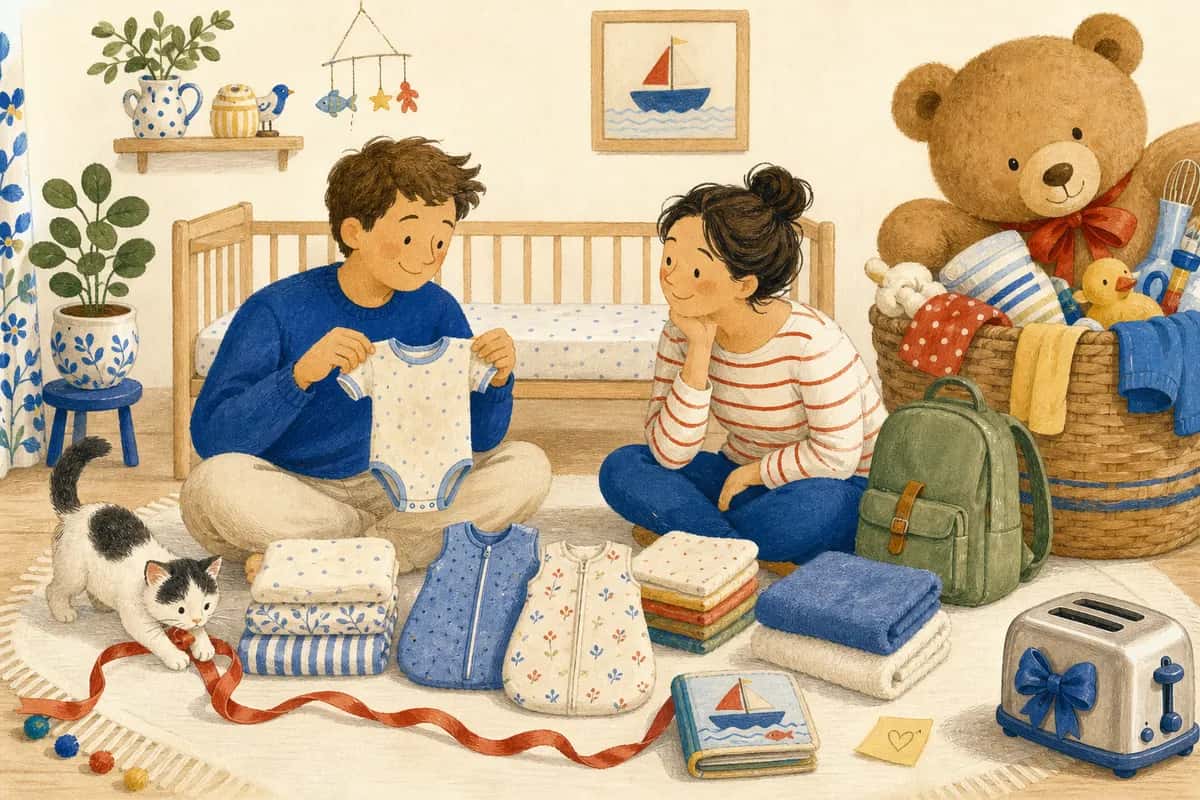
For an essential baby registry, plan for a place for your baby to sleep, a way to get around, feeding, diaper changes, and those first discoveries. Choose gear that fits your everyday life instead of collecting accessories “just in case.” Here’s what to ask for, how much you’ll need, and what you can skip at first.
Sleep: What do you really need?
For sleep, the basics are a suitable place for your baby to sleep, a compatible mattress, and a few easy-to-wash linens.
Start with your main sleep setup. Check its dimensions, safety standards, and the manufacturer’s instructions before adding accessories. For safe sleep guidance (American Academy of Pediatrics), ask your pediatrician or another healthcare professional.
Your registry can include:
- A crib or bassinet, depending on your space and routine.
- A mattress made for the model you choose, rather than one picked just because it’s cheap.
- Two or three fitted sheets, so you can keep up with laundry without piling up linens.
- Two wearable blankets, in the right size and for the conditions you expect to use them in.
- A compatible mattress protector, if it follows the manufacturer’s instructions.
Avoid buying multiple sleep setups before you know where your baby will actually sleep. A second one may be useful at the grandparents’ house, but only if you expect to stay there.
Often unnecessary at first: elaborate bedding sets, lots of wearable blankets in the same size, and sleep accessories chosen just for looks. Crib bumpers, pillows, and blankets shouldn’t be treated as essentials: check your setup with a healthcare professional.
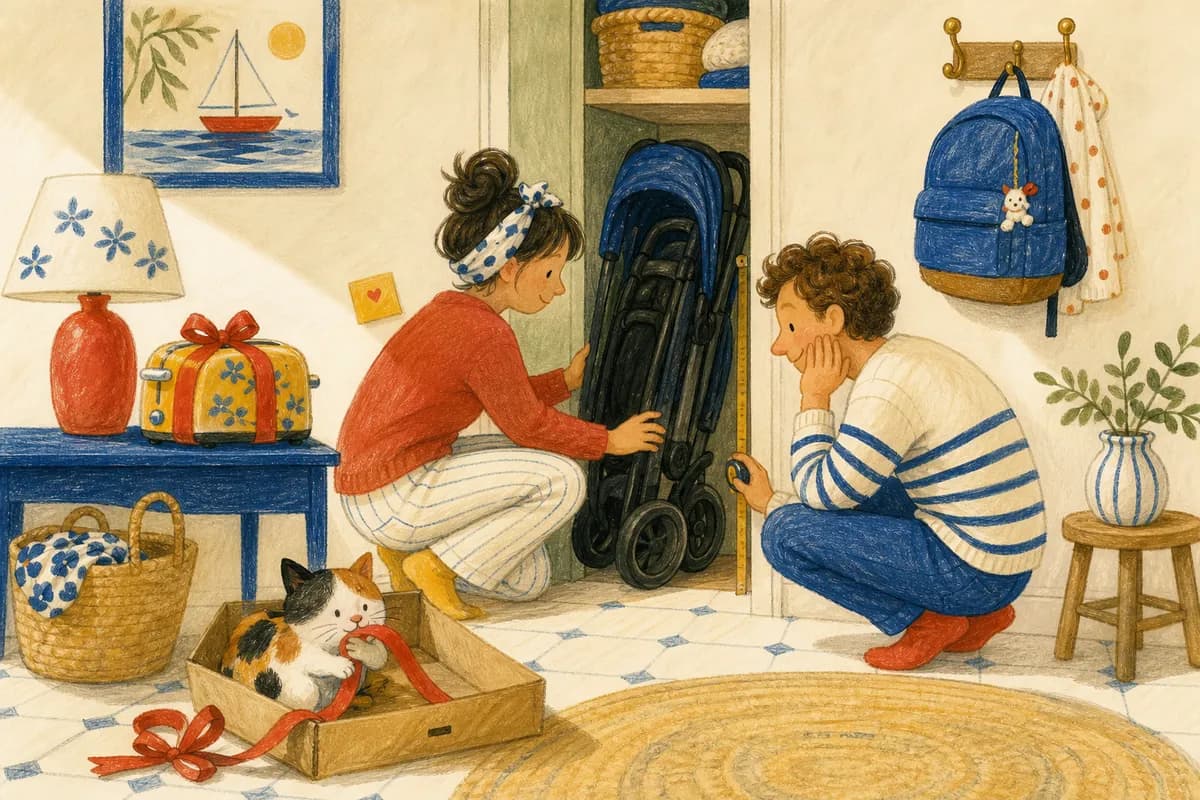
Getting around: stroller, baby carrier, or both?
For outings, choose a way to get around that fits your usual trips, and plan for a car seat if your baby will ride in a car.
Before choosing a stroller, measure your elevator, trunk, and storage space. If you use public transportation often, focus on weight and how it folds. If you walk on trails, check that the model is suited to that terrain.
Useful items include:
- A stroller suited to your baby’s age, with the accessories you’ll actually need for outings.
- A car seat that fits your baby and your vehicle, used according to car seat safety advice (American Academy of Pediatrics).
- A baby carrier or wrap, if babywearing fits your routine.
- A practical bag, which could simply be a backpack you already own.
Try bulky gear before adding it to your registry. For babywearing and car seat installation, get help from someone qualified and follow the instructions.
Often unnecessary: an overloaded stroller with features you won’t use, multiple diaper bags, or accessories chosen without checking compatibility. If you’re considering a used car seat, don’t judge it by appearance alone: you need to be able to verify its history and condition.
Feeding: What should you ask for without buying too soon?
For feeding, plan on a few simple accessories and tailor your purchases to your feeding plans, which may change after your baby arrives.
You don’t need to stock up on everything before you know what you’ll need. For questions about breastfeeding, how to prepare baby bottles (American Academy of Pediatrics), or feeding your baby, lean on the professionals supporting you.
Here’s a starter list you can adjust:
- Four to six burp cloths, useful for protecting clothes and handling little spills.
- A few easy-to-wash bibs, rather than a whole collection.
- Bottles if you expect to use them, starting with a small number.
- A bottle brush, if bottles are part of your setup.
- A nursing pillow, only if you’ve tried one and find it comfortable.
For bottles and accessories, specify the model you want to avoid incompatible parts. Follow the manufacturer’s cleaning and use instructions, as well as advice from your healthcare professionals.
Often unnecessary at first: a big set of identical bottles, a dedicated appliance for every task, or several dinnerware sets. A high chair and accessories for starting solids can wait. If you add them now, make it clear they’ll be used later.
Also avoid asking for large quantities of food. Your baby’s needs may change, so it’s better to buy what works when the time comes.
Care: What do you need for diaper changes and bath time?
For everyday care, a practical changing area, washable linens, and a few suitable accessories are usually enough.
The goal is to make diaper changes and baths easy, not to fill the bathroom with products. Ask your pediatrician or another healthcare professional what products and accessories to plan for.
You can add these to your registry:
- A changing pad, set on a suitable surface and used according to its instructions.
- Two or three changing pad covers or protective towels, for unexpected messes.
- Two or three bath towels, with or without a hood.
- A bathing setup that works in your home, after checking its instructions for use.
- An appropriate thermometer, chosen with advice from a healthcare professional or pharmacist.
- A small set of easy-to-put-on clothes, rather than a big stash in one size.
You don’t need a dedicated changing table if you already have a suitable setup. Think about storage, too: keep everything within reach so you don’t have to take your attention off your baby.
Often unnecessary: big skincare gift sets, specialized devices without a specific need, and large diaper stockpiles in one size. For clothes, note the expected season and welcome different sizes.
Play: How many toys should you plan for?
For play, a few simple items suited to your baby’s age are enough; you don’t need a huge collection.
Choose items that are easy to handle and clean. Check the recommended age, the item’s condition, and the manufacturer’s warnings, including for secondhand gifts.
You can ask for:
- A simple play mat, suited to how you plan to use it.
- Two or three small toys, such as a rattle or cloth book.
- A few board books, to enjoy together as the months go by.
There’s no need to buy several play gyms, mats, and musical toys before you know what your baby likes. Spending time together doesn’t require a room full of gear.
Often unnecessary: large stuffed animal sets, toys that are very similar, and bulky gear chosen just because it promises to support development. A baby bouncer can be handy in some situations, but it isn’t an automatic must-have or a substitute for a sleep space. Follow the instructions for use.
The essentials
A good baby registry covers your real needs, includes useful details, and offers gift options at different price points.
Here are some common price ranges to give your loved ones options—not spending targets:
| Category | Gift example | Suggested budget |
|---|---|---|
| Sleep | Fitted sheet | $10–$25 |
| Getting around | Practical backpack | $25–$60 |
| Feeding | Set of burp cloths | $15–$35 |
| Care | Bath towel | $15–$30 |
| Play | Book or small toy | $8–$25 |
- Take stock of what you own or can borrow before adding gifts.
- Include sizes, dimensions, and compatibility details, especially for linens and accessories.
- Flag your priorities, without making every item sound urgent.
- Consider secondhand items when appropriate, after checking their condition and safety instructions.
- Save uncertain purchases for later, especially bulk buys and gear tied to routines you haven’t figured out yet.
You can start with a sample baby registry, then create your baby registry on Seizenn. This free, ad-free service lets you add gifts from any store by pasting in a link. Notes like “secondhand if possible” and “similar item is fine” help explain your preferences. You share one link, and your loved ones can browse and reserve gifts without an account to prevent duplicates.
Keep your message simple when you share your registry:
Here are a few ideas that would really help us get ready for the baby. Sizes and other details are listed on the registry. We’re happy with secondhand items when noted, and there’s no pressure to give a gift.
Frequently asked questions
How many gifts should I put on a baby registry?
There’s no required number: start with the needs you can explain clearly. Include a range of prices, and remove items that duplicate what you own or can borrow.
Should I put clothes on my baby registry?
Yes—include sizes, the season, and easy-to-put-on styles. Avoid focusing every gift on the smallest size, since it’s hard to know how long your baby will wear it.
What baby gifts can you accept secondhand?
Clothes, some books, and some baby gear may be suitable if you can verify their condition and instructions for use. For items related to travel or sleep, check the instructions and ask a professional if you’re unsure.
How can I suggest an expensive gift without making loved ones uncomfortable?
Present it as one option alongside less expensive gifts. On Seizenn, you can offer an open-ended group contribution: the money goes directly to the recipient through their payment link or bank account, and Seizenn doesn’t collect it.