The 4-Gift Rule for Christmas: Ideas by Age
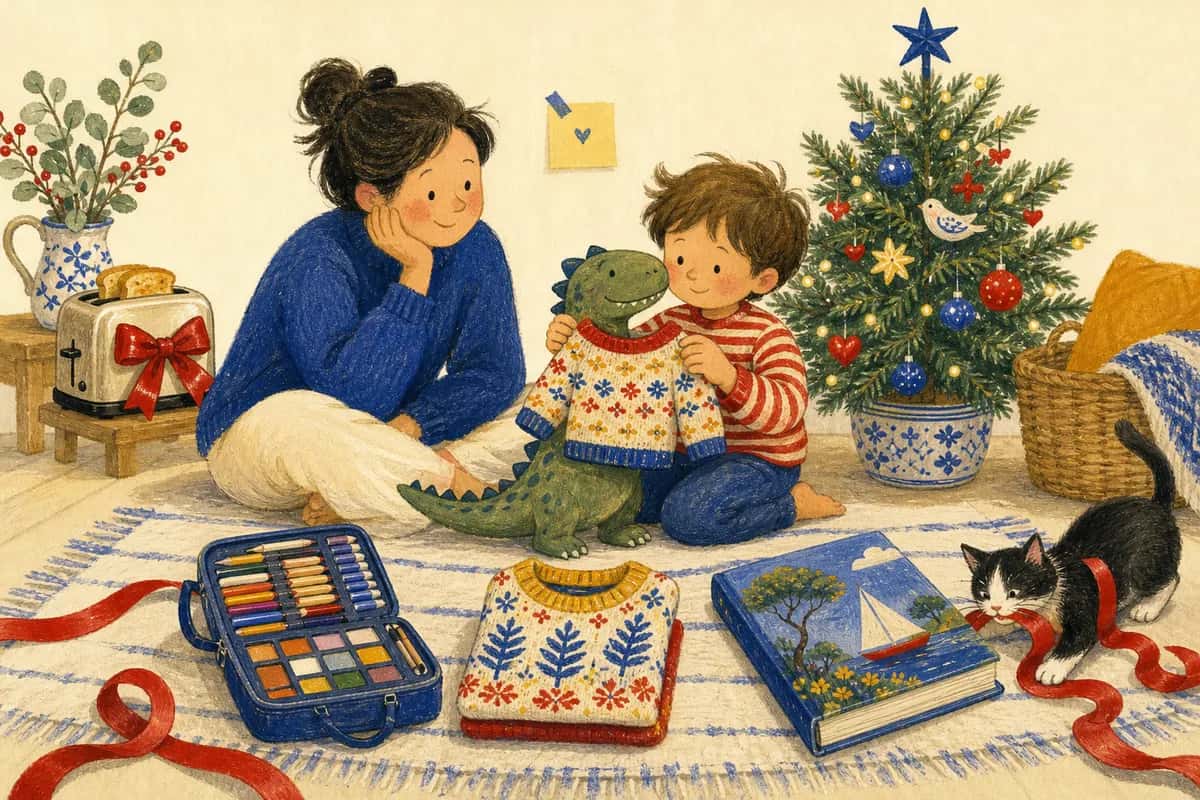
The 4-gift rule for Christmas means giving your child one thing they want, one thing they need, one thing to wear, and one thing to read. You can adapt it to their age and your budget, as long as you clarify whether the four gifts are from your household or the whole family. Here’s how to set that limit without turning Christmas into an accounting exercise.
Understand the four categories without making them rigid
The 4-gift rule calls for four presents per child, each with a purpose: a want, a need, something to wear, and something to read. Decide before anyone shops whether that limit applies to your household or to everyone, since four gifts per person won’t really cut down on the pile.
The categories are there to guide your choices, not to make you fill a box at all costs:
- Something they want: their top wish, the one they keep bringing up.
- Something they need: a genuinely useful item for their activities or everyday life.
- Something to wear: clothing or an accessory they’ll enjoy, too.
- Something to read: a picture book, graphic novel, novel, or another age-appropriate book.
One item can fit two categories. Sneakers can be useful and wearable: count them in just one category, rather than buying a fifth gift to resolve the overlap.
This rule is a family choice. Don’t make your child wait until Christmas for essentials, or treat necessities as a reward for good behavior.
Adapt the rule to your child’s age
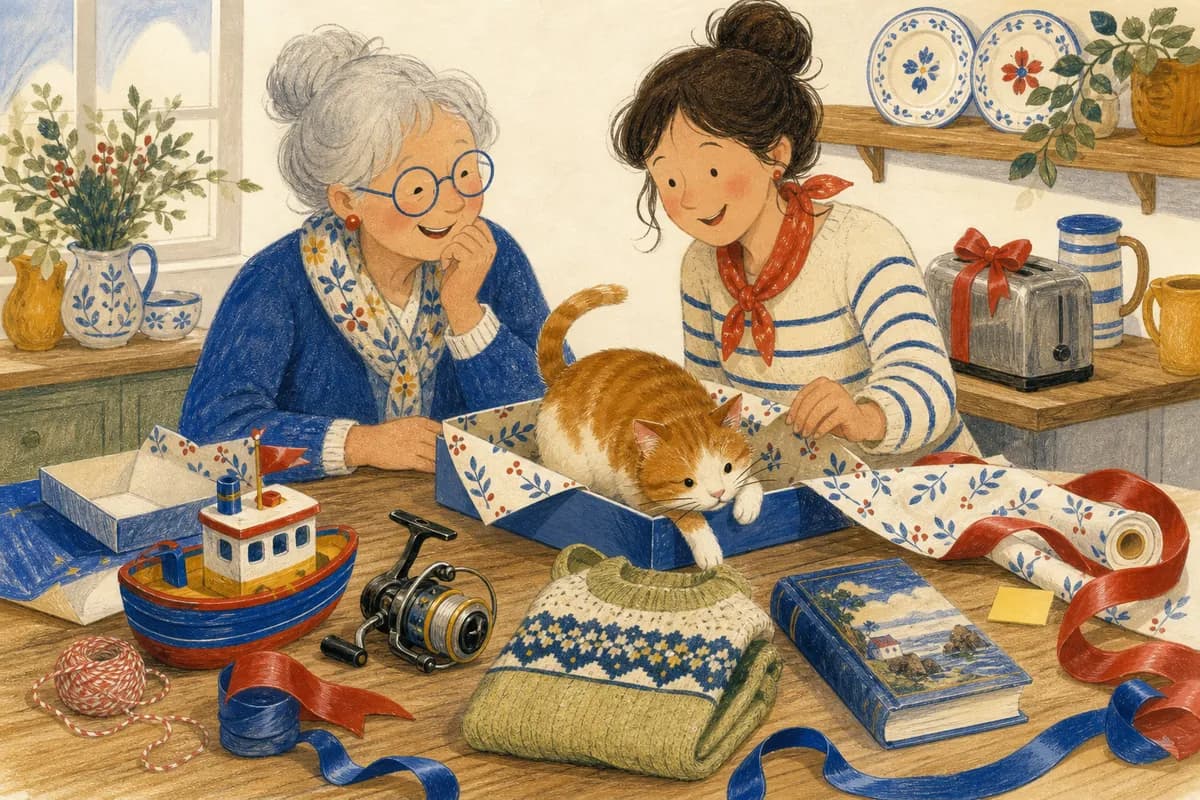
For kids under three, choose mostly based on the interests you observe; after that, gradually involve your child in picking from the four categories. For elementary-age kids, offer a few options in each category, then give teens more say in their choices, especially when it comes to clothes and books.
| Age | Something they want | Something they need | Something to wear | Something to read |
|---|---|---|---|---|
| Under 3 | An age-appropriate toy that matches their interests | Something useful for their activities | Clothes in the right size | A board book to look at together |
| 3–5 | A game they ask for often | Supplies for an activity they enjoy | A costume or an outfit they picked with you | A picture book about a favorite subject |
| 6–9 | A specific game or toy | An accessory for a hobby they enjoy | A sweatshirt or accessory they like | A graphic novel or early chapter book |
| 10–12 | A gift tied to their current passion | Supplies for a specific project | An item they chose with you | A manga, novel, or nonfiction book |
| 13 and up | A clearly identified wish | Something useful for school or their hobbies | Clothing with the size and fit spelled out | A book they picked themselves |
These are examples, not a mandatory shopping list. For younger kids, follow the manufacturer’s age and use guidelines.
Ask: “If you could only pick one, which would it be?” Then wait a few days before confirming. That can help you tell a lasting wish from something they just discovered.
Set one overall budget, not four equal amounts
A total budget of $40 to $100 per child can be a starting point for splitting up the four gifts. These are suggested guideposts, not the results of a survey.
You can absolutely spend less, especially if you shop secondhand or use books already available in excellent condition. The point is the intention behind each gift, not its price tag.
With a $60 budget, one possible breakdown is:
- $25 for their top wish;
- $10 for something they need;
- $15 for something to wear;
- $10 for something to read.
There’s no rule that every category has to get the same amount. Instead, set a spending limit for each pick before you start looking at stores.
If the gift they want is over budget, suggest another option or ask several relatives to chip in. It’s still one group gift, not an extra gift from every person who contributes. If you have more than one child, explain that four gifts doesn’t mean they’ll all cost the same.
Explain the plan to family before they shop
Let relatives know about the rule in November, or at least before they start shopping. Be clear about how many gifts you’re aiming for and how people can contribute. Present it as a choice your household is making to simplify Christmas—not as a lecture about other families’ habits or generosity.
A specific message helps avoid confusion:
This year, we’re trying four gifts total for each kid: something they want, something they need, something to wear, and a book. We’d like to split those four gifts among us. Before you buy anything, let us know what you’d like to give so we can coordinate.
If a grandparent wants to give more, acknowledge the thought before reminding them of the limit:
I know you want to make them happy, and we really appreciate that. We’re still hoping to stick to four gifts this year. You could contribute to the gift they want most, or plan some time together without adding another item.
Don’t turn every invitation into a replacement gift. An outing or an afternoon together can just be regular family time.
Give your child a heads-up before December, too:
This year, you’ll get four gifts we chose with care. You can give us a few ideas, but not every idea will become a gift.
If relatives aren’t on board, be clear about which four gifts are from your household and which are from others. It’s better to set an honest limit for your own family than promise a total you can’t control.
Make a list that keeps the rule easy to follow
Choose the four gifts three to four weeks before Christmas, then note each item’s category, size if needed, and acceptable alternatives. If several relatives are contributing, share one list and ask them to claim an item before buying. That way, everyone can see what’s still available without a lot of back-and-forth.
You can put together your list for using the 4-gift rule at Christmas with Seizenn, a free gift-list service. Add gifts from store links and use the notes to include details such as “To wear: size 8, prefers green.”
Relatives can view the list and reserve an item without creating an account. If you’re buying one of the four gifts for your child yourself, you can mark it as reserved for them. Purchases, shipping, and returns are handled directly with the store.
Before you create your Christmas list, check that it includes:
- Just one choice in each category to avoid duplicate purchases.
- A specific size and item reference when those details matter.
- A note like “secondhand is fine” or “similar item is okay” if you’re open to it.
- A backup option you’ve agreed on in case something is out of stock.
The bottom line
The rule works best when you first decide who the limit applies to, then choose the four gift intentions, and finally set the budget for your child. Explain the plan before anyone shops, make age-appropriate choices, and leave enough room for the joy of giving without adding presents out of habit.
- Set the limit: four gifts from your household or from the whole family.
- Choose four intentions: a want, a need, something to wear, and something to read.
- Listen to your child without promising to buy every idea they mention.
- Set one overall budget rather than requiring four equal amounts.
- Tell relatives early with a clear, friendly message.
- Consider secondhand and group gifts if everyone is comfortable with them.
- Check in after Christmas: keep what worked and adjust the rest next year.
Frequently asked questions
Do the four gifts include presents from grandparents?
That depends on the limit you set: four gifts from your household, or four total from you, grandparents, and other relatives. To keep the total number of presents down, divide the four categories among the adults. Let everyone know before they shop, and suggest group contributions.
Can you use the 4-gift rule on a tight budget?
Yes. The 4-gift rule doesn’t set a minimum price. You can choose secondhand items, a useful piece of clothing, and a gently used book in excellent condition. Set your total budget first, then divide it however you like; the four gifts don’t have to cost the same.
What if my child doesn’t want any clothes for Christmas?
Offer a few wearable choices without insisting on something they dislike; an accessory or costume may work, depending on their interests. If they truly don’t want anything in that category, adjust the plan together. The rule should help you choose, not make you buy something they won’t use.
Does a set of several items count as one gift?
A coordinated set, such as a book collection, can count as one gift if you decide that in advance. But avoid bundling unrelated purchases just to get around the limit. The goal is to choose fewer presents and put more thought into each one.
What should I do if a relative gives a fifth gift anyway?
Avoid addressing the disagreement in front of your child while they’re opening presents. Thank the relative for the thought, then privately remind them of your agreement before the next occasion. If extra gifts keep showing up, describe the rule as your household’s limit, not a family-wide total.