How to Make a Gift List That Feels Like You

To make a good gift list, choose things you genuinely want, include a range of prices, and add the details your friends and family need to choose. A wish list is a way to offer ideas, not place an order. You can keep one going all year and share it when someone asks what you’d like.
How many ideas should you put on your list?
Start with 10 to 15 varied ideas, then adjust based on how many people might ask you for suggestions.
That number is a helpful starting point, not a rule. For two or three close friends or family members, six thoughtful ideas may be plenty. If several groups—family, friends, and coworkers—might ask, a list of around 15 gives them more options.
Here’s a good test: someone should be able to find an idea that fits their budget without having to ask you five questions. Include a few small gifts, some mid-range options, and, if you really want one, a more expensive gift.
Here are some general price ranges to help you add variety without making anyone feel obligated to spend a certain amount:
| Suggested budget | Ideas to include | Helpful details to add |
|---|---|---|
| Under $15 | Used book, notebook, small accessory | Specific edition or preferred size |
| $15–$40 | Game, art supplies, useful item | Model, dimensions, or what’s included |
| $40–$80 | Class, hobby gear | Conditions and availability |
| Over $80 | Quality item built to last, group experience | Whether it’s a top pick and possible alternatives |
Don’t make your list all big-ticket items. At the same time, don’t pad the lower price ranges with things you don’t actually want. Doing something together may be a better idea than adding an accessory just to fill out the list.
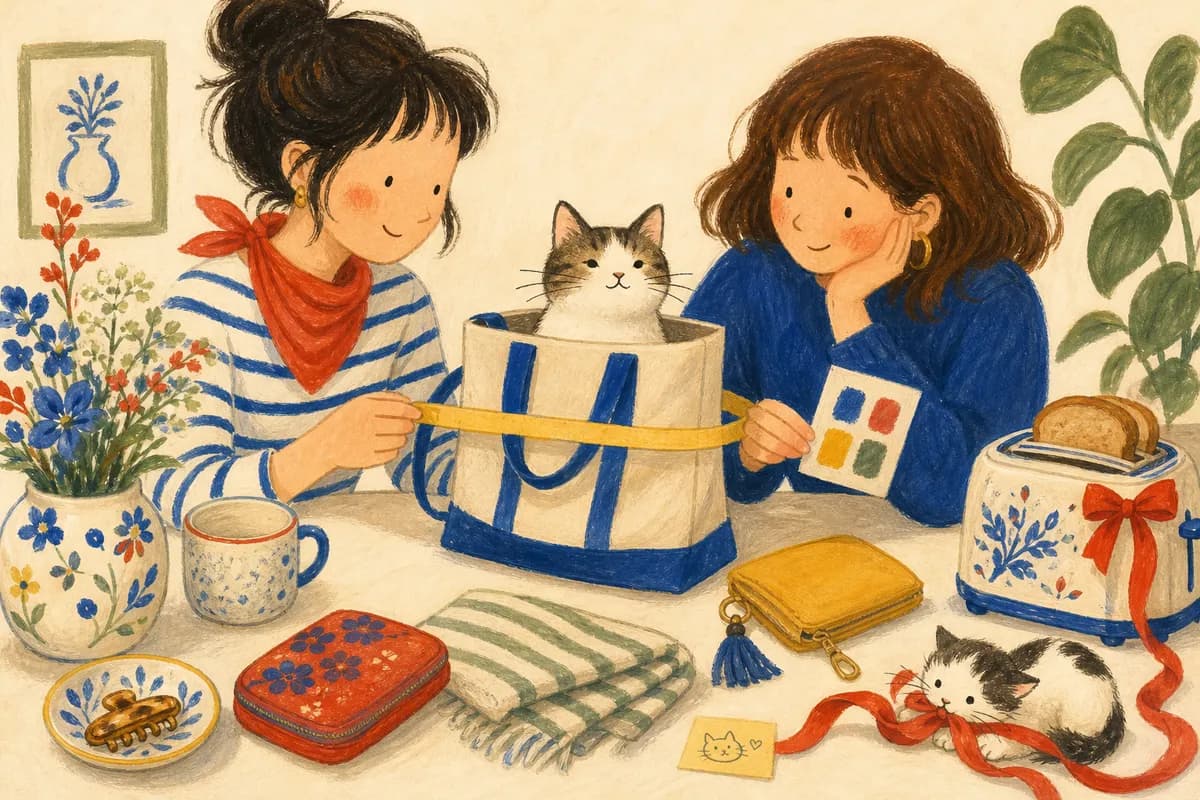
What should you include: wants, needs, and experiences?
Mix fun things, useful items, and experiences, but only include things you’ll really use or enjoy.
Look at your everyday life rather than browsing endless gift guides. What do you borrow a lot? What would help you enjoy a hobby? What worn-out item would you like to replace? What activity do you keep putting off?
Build your list around four categories:
- Fun things you want: a book you’ve had your eye on, a game, a print, or something handmade.
- Useful things you’ve chosen: a bag that works for your commute, a hobby tool, or a lamp in the right size.
- Experiences: a class, a museum visit, concert tickets, or an outing together.
- Secondhand finds: an out-of-print book, a vintage item, or gear in good condition.
A practical item makes a good gift if you genuinely want to receive it. You don’t have to make your whole list sensible or productive.
For an experience, include the location, dates that work for you, number of people, and booking details. Say whether you’d rather pick a date with the person giving it to you. A ticket for a night you’re working could end up feeling like an obligation.
For secondhand gifts, describe what condition you’d be happy with: complete, working, no missing parts, or light signs of use if that’s okay with you. Mention anything to check, such as dimensions, included accessories, or compatibility. Listings can disappear quickly, so include search terms as well as a link.
How should you note sizes and preferences?
For each idea, add the details that could change someone’s choice: size, color, dimensions, compatibility, and acceptable alternatives.
A product name by itself often leaves too much room for guesswork. “A sweater” doesn’t say what fit or material you want. “A case” doesn’t say which device it needs to fit.
Use a short template, in the same order each time:
- What you want: a specific name or simple description.
- The right version: size, model, color, format, or dimensions.
- Your deal-breakers: materials to avoid, something you already own, or an essential accessory.
- Where you’re flexible: an acceptable alternative, another store, or a secondhand version.
For example:
Crewneck sweater, size medium in this style, relaxed fit. Blue or green, no wool. A similar option is fine if the fabric and measurements are close.
Or, for a hobby:
5-by-7-inch sketchbook with paper suitable for watercolor. Any cover is fine. I already have brushes, so I don’t need a full set.
Check each store’s size chart instead of assuming your usual size will always fit. If an item needs to fit in a specific space, include the maximum dimensions.
Keep it brief: three useful lines are better than a long explanation. The goal is to help someone avoid a wrong choice, not control every detail of the gift.
How do you edit your list and keep it useful?
Review your list before sharing it, and remove anything you already own or don’t want anymore.
Wait two or three days after making your first selection. That pause can help you tell a lasting want from something you spotted while scrolling. Ask yourself: “If I got this tomorrow, would I be happy to use it?”
Then do a quick check:
- Does the link go to the right item and version?
- Is the listed price still close to what you had in mind?
- Is the item available, or is there an alternative?
- Have you already bought or received something similar?
- Is there a range of prices and types of gifts?
Mark two or three true favorites without making the whole list feel urgent. If every idea is a top priority, your friends and family won’t know where to start.
Take a look at a sample wish list to see how much detail is helpful. Still, make the list your own: a short, personal list is more useful than a long one copied from somewhere else.
How can you share your list without feeling awkward?
Share your list as a practical answer when someone asks, and make it clear they’re free to choose something else—or not give a gift at all.
The easiest time is when someone asks what you’d like. You can also share the link in a conversation where gifts are already coming up. Don’t send it repeatedly or follow up about what someone did or didn’t pick.
Here’s a message you can copy:
You asked what I’d like, so I put a few ideas together here. There are options at different price points, and I’m happy with secondhand items when I’ve noted that. These are just suggestions—there’s no pressure to choose from the list.
For a list you keep all year:
I jot down gift ideas throughout the year so I don’t forget them. If you ever need an idea for me, I can send you the link. I’d also love to do something together.
To make a gift list of things you’d like, choose a format that’s easy to browse and share with one link. Don’t put personal contact details in the notes; include only what someone needs to choose the gift.
Seizenn is a free gift-list service with no ads. You can add a gift from any store by pasting its link, then add notes such as “favorite,” “secondhand if possible,” or “similar item is fine.” Friends and family can view and reserve gifts without an account. Reservations are hidden from the person who made the list, helping keep gifts a surprise and avoid duplicates.
Once your ideas are ready, you can make your wish list on Seizenn. Purchases, payments, shipping, and returns are handled directly by the store.
The takeaway
A good gift list gives people choices while sharing enough detail to help them pick with confidence.
- Start with 10 to 15 ideas, then adjust the length for the people who may ask.
- Include a range of prices without suggesting anyone has to spend a certain amount.
- Mix wants, useful items, experiences, and secondhand finds.
- Note sizes, dimensions, preferences, and acceptable alternatives.
- Remove outdated ideas and check your links before sharing.
- Send one link with a simple message and no expectation of a gift.
Frequently asked questions
Can you make a gift list for no particular occasion?
Yes, you can keep a wish list open all year. Add ideas as they come to you, then look it over before sharing the link with someone who asks for a suggestion.
Should you include only affordable gifts?
No, you can include a more expensive item if it really matters to you. Add several less expensive options, too, and present every idea as a possibility, never an expectation.
How do you ask for a secondhand gift?
Say clearly that you’re open to used items and describe the condition you’d like. Note anything essential, such as parts, accessories, or an exact reference, to make the search easier.
Does a gift list take the surprise out of gift-giving?
It offers a starting point, but you can leave choices like color, maker, or a similar item open. On Seizenn, reservations are hidden from the person who made the list, so you won’t know which gift was picked.
What if someone would rather give you something else?
Let them choose freely: your list is a helpful guide, not an instruction. If a detail like size or compatibility is essential, explain it simply so they don’t give you something you can’t use.