Kids' Christmas Wish List: How to Help by Age
To help a kid make a Christmas wish list, sit down with them in early November, let them dream first, then work together to pick a few ideas that fit their age. After that, you turn their wishes into two things: a letter to Santa for the magic, and a clear list for the family. Here's how to do it, step by step.
When and how do you start the list with your kid?
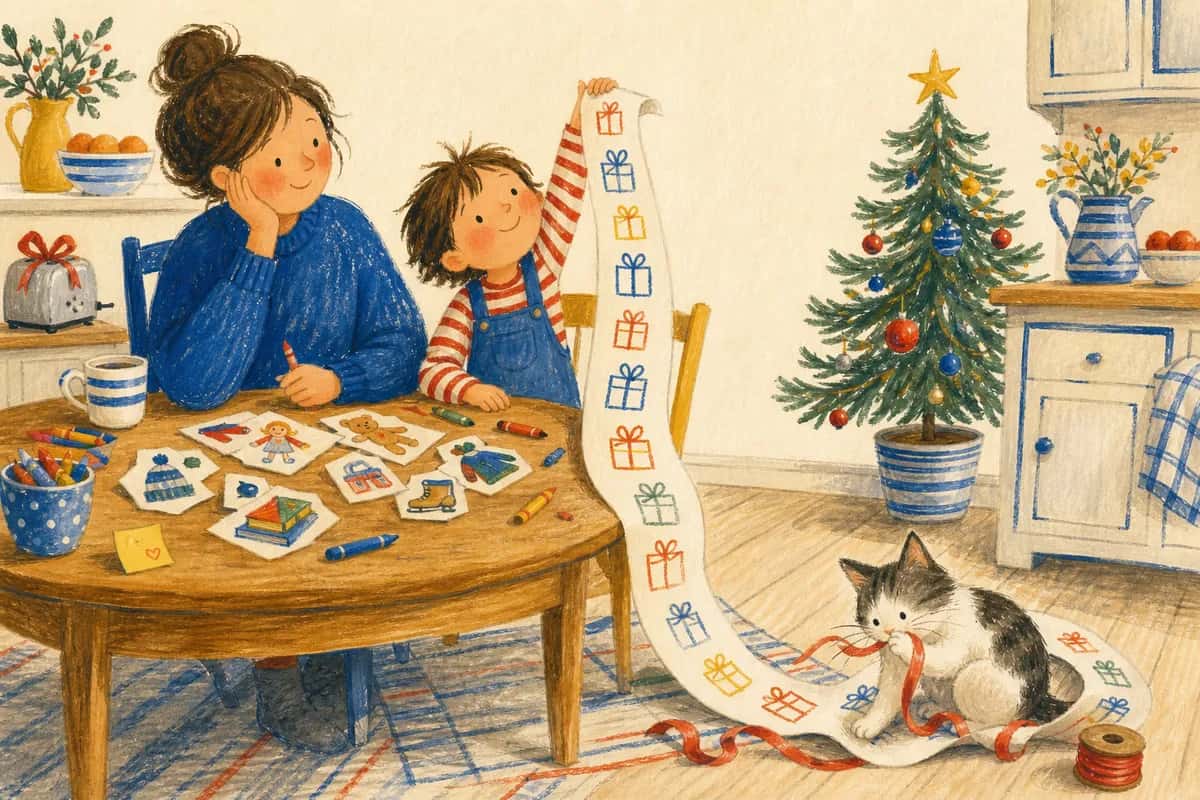
The sweet spot is between late October and mid-November: early enough that family has time to shop, late enough that your kid's wishes don't change ten times. Pick a calm moment, like a Sunday afternoon, with paper, crayons, and maybe a toy catalog.
A few simple ground rules to keep it fun:
- Let them say everything first. Write down all their ideas without judging. Sorting comes later.
- Ask open-ended questions. "What do you like to play with right now?" "What's missing for your favorite activity?"
- Do two sessions. One for dreaming, another a few days later for sorting. What comes up again the second time is often a real want.
- Skip the screens during the exercise. Ads create wishes that rarely last.
How many ideas should you list at each age?
A kid's Christmas list works well with 3 to 10 ideas depending on age, with a little wiggle room so several relatives can give gifts. Too many ideas drown out the real wishes, too few leads to duplicates or random purchases.
| Age | Kid's role | Number of ideas | What works well |
|---|---|---|---|
| 0 to 2 years | None, you decide | 4 to 6 | Sensory toys, cloth books, clothes, useful gear |
| 3 to 5 years | They point, paste, or draw | 4 to 6 | Pretend-play toys, puzzles, costumes, books |
| 6 to 9 years | They suggest and write | 5 to 8 | Building sets, board games, arts and crafts, sports |
| 10 years and up | They make their list, you approve | 6 to 10 | Gear for their interests, books, outings, experiences |
For little ones
Before age 3, kids don't make a list: you put it together. Think about what they like to touch, listen to, and handle. Add practical things you actually need, like a winter outfit or a bath seat.
Between ages 3 and 5
At this age, they cut pictures out of a catalog or draw what they want. Keep their picks, even the rough ones. A "red car that goes fast" becomes a race track: it's up to you to translate.
From age 6 on
They can write it themselves, typos and all, and that's great. Get them more involved in the sorting. Around age 10, they can look up items with you and jot down details like size or color.
How do you mix wants and needs without killing the magic?
The simplest method is to split the list into four categories: something they want, something they need, something to wear, something to read. It's a popular rule of thumb, it gives a clear framework, and kids get it fast.
- A want: the toy they've been talking about for weeks.
- A need: a backpack, ice skates, a bedside lamp.
- Something to wear: fun pajamas, a beanie, slippers.
- Something to read: a comic book, a picture book, a dinosaur encyclopedia.
Present the needs as real gifts. A bike in the right size is just as exciting as a toy if you wrap it up nicely. You can also add experiences: a trip to the zoo, a climbing session, a movie ticket with a godparent.
On the budget side, here are typical ranges:
| Who's giving | Typical range |
|---|---|
| Parents | $50 to $150 total |
| Grandparents | $30 to $80 per kid |
| Aunts, uncles, godparents | $15 to $40 |
| Cousins, friends | $10 to $20 |
A pricier gift, like a bike or a game console, can be a group gift. That's often more useful than a pile of small toys.
How do you write the letter to Santa?
The letter to Santa is mainly there to spark the magic: keep it short and personal, and let your kid write it or dictate it. It doesn't have to include the whole list. Three or four wishes are plenty, and the other ideas can go on the family list.
An easy structure for little kids:
- A greeting.
- What they did well this year.
- Their wishes.
- A treat for Santa or the reindeer.
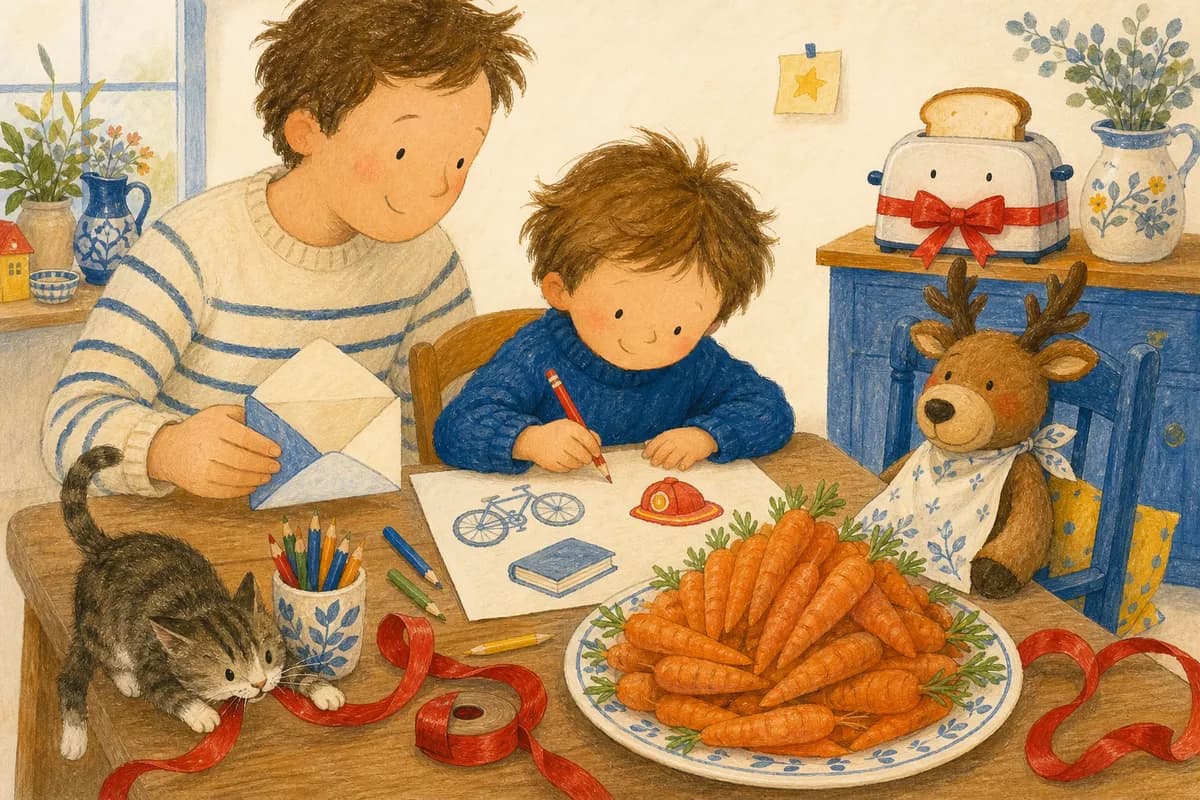
Dear Santa, This year I learned to ride my bike without training wheels and I helped Mom clean up. For Christmas, I'd really like a book about space, a firefighter costume, and a card game. I'll leave carrots out for the reindeer. Hugs, Leo
Tip: take a photo of the letter before you "mail" it. You'll keep it as a keepsake and you'll know exactly what they asked for.
Also let your kid know that Santa can't bring everything. One sentence does it: "He does his best for all the kids in the world, so he picks from your list."
How do you share the list with family without duplicates?
The most effective way is to create an online list with your kid's ideas and send one single link to the whole family. Everyone can see what's still available, and you avoid finding three identical puzzles under the tree.
With Seizenn, a free, ad-free service, you add a gift from any store by pasting its link: big chain, independent maker, neighborhood shop, or secondhand. For each idea, you can note a size or color, mark a "favorite," write "used is fine" or "similar is okay." Relatives reserve gifts without creating an account, and reservations stay hidden from you, so the surprise is preserved. For a big gift, several people can chip in any amount they choose, with the money going straight to your Wero, Lydia, PayPal.me link, or your IBAN. You can create your Christmas list in a few minutes, or see an example list first.
Here's a message you can send to the family:
Hi everyone! Leo made his Christmas list, here it is. You can reserve a gift right on the page so we don't end up with duplicates. If you'd rather chip in together on the bike, that works too. Thanks, and see you soon for the holidays!
And if there are lots of adults in your family, a Secret Santa drawing takes the pressure off gift-buying among the grown-ups.
The bottom line
- Start the list between late October and mid-November, in two sessions: dream, then sort.
- Match the number of ideas to age: 4 to 6 for little ones, up to 10 for older kids.
- Mix wants and needs with the "want, need, wear, read" rule.
- Give the family budget guidelines and suggest big gifts as group gifts.
- Keep the letter to Santa short and magical, and snap a photo of it.
- Share one online list to avoid duplicates and keep the surprise.
Frequently asked questions
At what age can a kid make their own Christmas list?
Around age 6, they can write their ideas themselves. Before that, they draw or paste pictures and you translate. Around age 10, they can make their list almost on their own, and you're there to approve it.
How many gifts should go on a kid's Christmas list?
Between 4 and 10 ideas depending on age and how many relatives are giving. Plan on a few more ideas than givers so people have choices. Beyond that, the real wishes get lost.
What if my kid asks for a gift that's too expensive?
Explain that Santa picks from the list and can't bring everything. You can also suggest the gift as a group present, with each family member chipping in whatever amount they choose.
Does the family need an account to reserve a gift on Seizenn?
No, relatives can view the list and reserve gifts without an account. You can create one for free to save the list across all your devices. Otherwise, it stays saved in your browser.
Do I need to put the whole list in the letter to Santa?
Not necessarily. Three or four wishes are enough in the letter to keep the magic alive. The rest of the ideas go on the list you share with the family.