A Santa Letter Template for Every Age
A good Santa letter template only needs a few lines: a greeting, a memory from the year, a few wishes, and a sign-off. For kids ages 3 to 10, adjust how much space you give them to draw and how much help you offer with writing. Here are examples to copy for getting ready for Christmas with a Santa letter template, without turning it into homework.
How long should the letter be for each age?
For ages 3 or 4, suggest a drawing with two sentences you write down as they dictate. Around ages 9 or 10, about ten lines is plenty. Set aside five to fifteen minutes, depending on how your child feels, and stop when they get tired—even if the page isn’t full.
Age is a starting point, not a rule. An 8-year-old may prefer to draw, while a 5-year-old may have plenty to say.
| Age | Format to try | Your role |
|---|---|---|
| Ages 3–4 | A drawing and two sentences | Write down what they dictate |
| Ages 5–6 | Three to five sentences | Prepare an easy-to-read example |
| Ages 7–8 | Five to eight lines | Help organize their ideas |
| Ages 9–10 | Eight to twelve lines | Proofread only if they ask |
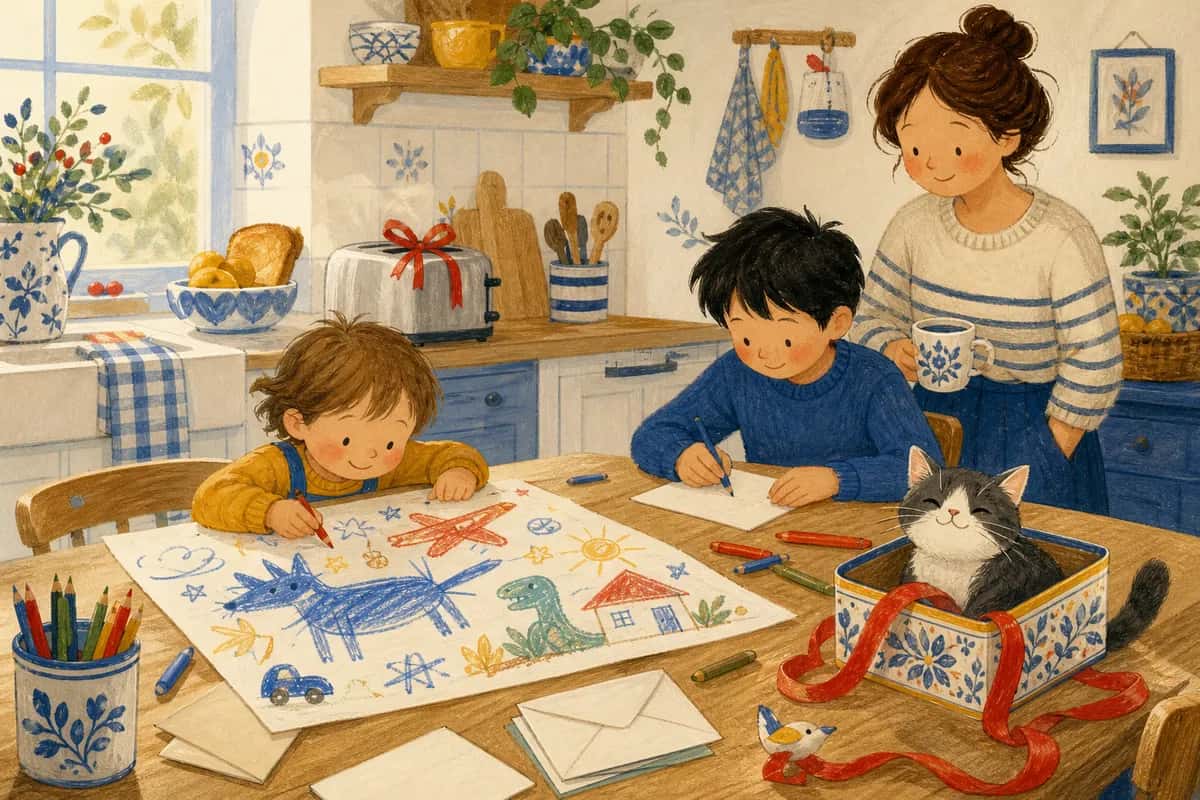
Set out a sheet of paper, a few crayons, and some scrap paper. Just ask, “Would you rather start by telling me about something or by drawing?” Keep their words, even if they don’t sound like a traditional letter.
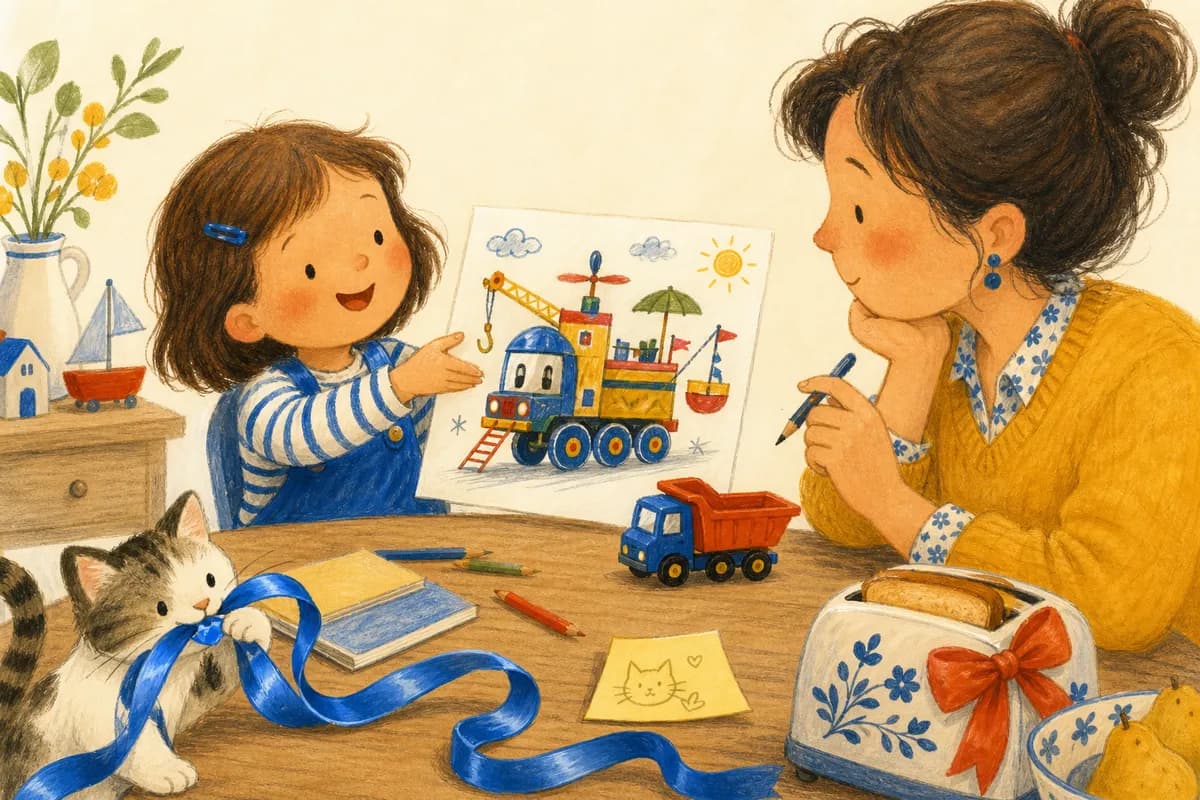
Ages 3 and 4: a letter to draw and dictate
At ages 3 or 4, let your child draw what they’d like to receive, then write their words next to the picture. There’s no need to ask them to copy the whole letter. Two short sentences and their name make it personal, even if the drawing is hard to recognize.
A template for an adult to write down
Hi Santa,
My name is [name]. This year, I really liked [memory].
I’d like [wish]. I made you a picture.
Bye, Santa!
[Name]
Make three spaces on the page: write the greeting at the top, let your child draw in the middle, and leave space at the bottom for them to sign however they like. A scribble can be their signature.
If they’re not sure what to share, ask one specific question: “Did you like our trip to the park or visiting Grandma and Grandpa more?” Don’t fire off a bunch of questions; one memory is enough.
For wishes, ask, “What would you like to do with it?” That can help you understand a mysterious drawing. Write their answer next to it, such as “a truck to carry my animals,” without changing their idea.
Ages 5 and 6: a few easy sentences to copy
For ages 5 or 6, suggest a three- to five-sentence letter with blanks to fill in and a large, easy-to-follow example. Your child can copy just the greeting and their name while you write down the rest as they dictate.
A short template
Dear Santa,
My name is [name], and I’m [age] years old.
This year, I learned how to [something new or a new activity].
For Christmas, I’d really like [wish], because [reason].
I hope you have a great trip.
[Name]
To help them talk about the year, look for a specific detail: riding a bike, recognizing their name, planting seeds, or putting on a show. This isn’t a report card. “I learned about snails” deserves a spot just as much as “I learned to read some words.”
You can offer these sentence starters:
- “My favorite memory is…”
- “I laughed so hard when…”
- “Now I know how to…”
If they get stuck on a letter or word, write it on a separate sheet. Don’t correct every mistake. The goal is to share their message, not create a perfect copy.
Ages 7 and 8: share the year and explain their wishes
For ages 7 or 8, help your child organize the letter into three parts: a short story about their year, their wishes, and a sign-off. Five to eight lines are plenty, with one specific memory and a brief reason for each of the two or three gifts they mention.
A template with a memory
Dear Santa,
This year, I really liked [moment], especially when [detail]. I also discovered [activity or interest].
For Christmas, I’d like [first wish] so I can [what it’s for]. I’d also like [second wish]. My favorite is [choice].
These are just ideas. I like surprises, too.
Thanks for reading my letter. Have a safe trip!
[Name]
Before writing, try a quick conversation: “What memory do you want to share? What would make you happy? How do you want to say goodbye?” Those three answers already give the letter a structure.
To avoid a simple list of toy names, help your child explain how they’d use each gift: “to build a city,” “to draw animals,” or “to play with my sister.”
Don’t ask them to promise to be good in exchange for gifts. They can share an effort they’re proud of without making the letter sound like a request for a reward.
Ages 9 and 10: a personal letter that doesn’t feel too little-kid
For ages 9 or 10, offer a structure instead of a word-for-word script so your child can keep their own voice. About ten lines gives them room to share an important moment, explain what they’d like, and finish with a question or a bit of humor.
A template to make your own
Hi Santa,
This year, I’ll especially remember [memory], because [reason]. Lately, I’ve been really interested in [hobby or interest].
Here are a few ideas for Christmas: [wishes]. If I could pick just one, it would be [favorite], so I can [what it’s for]. I’d also be happy with a secondhand one.
By the way, [fun question]?
I hope you have a great Christmas Eve!
[Name]
The secondhand line is optional—keep it only if it genuinely fits what your child wants. The same goes for humor. “Does each reindeer have a favorite spot?” works better than a joke an adult makes them include.
If they want to mention a tough year, let them do so without asking for details: “This year wasn’t always easy, but I liked…” is enough.
Offer to proofread, but don’t insist. Mostly, check with them that their wishes are clear. A color, size, or type of activity may be more useful than a long description.
The takeaway
Keep the letter short and true to your child’s words. Before getting the envelope ready, check the mailing details rather than relying on what you remember from previous years. Check with the relevant postal service for the address and deadline for mailing a letter to Santa.
- Ages 3–4: a drawing, two dictated sentences, and a signature however they like.
- Ages 5–6: a few simple sentences, with help copying them.
- Ages 7–8: a memory, a few wishes, and a favorite.
- Ages 9–10: a flexible structure and a personal tone.
- At any age: no one has to prove they deserve gifts.
If your child would rather choose from pictures, Seizenn’s free Santa letter tool lets them browse a catalog of real toys, with no prices or stores shown. They can circle up to ten and put up to three hearts on their favorites. The on-screen takeoff is just for fun; to mail the letter, you’ll need to print it.
For parents, a button you press and hold turns the selections into a Christmas wish list you can share with family. It’s a handy way to pass along their wishes without asking your child to rewrite the letter.
Frequently asked questions
What should a 3-year-old put in a letter to Santa?
At age 3, a drawing and two sentences dictated to an adult are plenty. Write their name, a small memory, and a wish in their own words. Let your child sign however they like; they don’t need to know how to write to take part.
How should you start and end a letter to Santa?
You can start with “Hi Santa” or “Dear Santa,” then let your child introduce themselves or share a memory. To wrap up, “Have a safe trip!” or “I hope you have a great trip” is enough. Add their name, without making the sign-off too formal.
Should you correct mistakes in a letter to Santa?
You don’t need to correct every mistake in a letter to Santa. Offer help if your child wants it, especially if they need to make a wish easier to understand. You can write a word on scrap paper without erasing their work or turning the moment into a lesson.
Where can I find the address and mailing deadlines?
Check with the relevant postal service for the address and mailing deadlines for letters to Santa. Confirm the details when you’re getting the envelope ready. If your child uses an online tool, remind them that the animated takeoff is just for fun; mailing the letter requires printing it.